CHAM | Concurso para Investigador Doutorado — Aviso n.º 9000/2020
Links para o edital:
NOVA FCSH - https://fcsh.unl.pt/static/
Era Careers - http://www.eracareers.pt/
Bolsa de Emprego Público - https://www.bep.gov.pt/pages/

NOVA FCSH - https://fcsh.unl.pt/static/
Era Careers - http://www.eracareers.pt/
Bolsa de Emprego Público - https://www.bep.gov.pt/pages/
Esta investigação de mestrado - “Os assistentes sociais e a criação de áreas protegidas em Portugal (1976-1980)” - tem como epicentro temático o Serviço Social e o ambiente. O objecto desta investigação centra-se no estudo do papel desempenhado pelos assistentes sociais (AS) na criação, organização e gestão de áreas protegidas. Em concreto, a investigação centra-se no processo de criação do Parque Natural da Serra da Estrela (PNSE) e do Parque Natural de Montesinho (PNM). A investigação tem como principais objectivos: i) perceber o processo de integração dos assistentes sociais na estrutura organizacional e os níveis de entrosamento nas equipas multidisciplinares; ii) identificar as tarefas, procedimentos e responsabilidades assumidas pelos AS, assim como as competências profissionais que mobilizaram; iii) enquadrar a actuação destes AS no quadro da evolução do Serviço Social português nas últimas quatro décadas. Quanto à metodologia, a escolhida foi a qualitativa e, como técnicas de recolha de dados, foram usadas narrativas biográficas, entrevistas semi-estruturadas e pesquisa documental em acervos históricos do PNSE e do PNM e da imprensa regional da época. O tratamento do material recolhido efectou-se com o recurso a análise de conteúdo categorial. Das considerações que é possível apontar, nesta investigação, salienta-se uma actuação de cariz comunitário, por parte das assistentes sociais, assente em abordagens participativas e com vista à dinamização e desenvolvimento do território. Salienta-se, ainda, que esta actuação foi desenvolvida em complementaridade com outros técnicos, no âmbito da concretização dos objectivos de um parque natural. Este trabalho permite, ainda, documentar aspectos da identidade profissional do Serviço Social português que, à época, interveio como agente no interface entre política social e política ambiental.
In this new heading we highlight some of the main Portuguese natural parks, valuing their contribution to the environmental heritage outreach.
This month – OMARE - The Northern Littoral Natural Park (Portugal)
OMARE - The Northern Littoral Natural Park (in Portuguese, Parque Natural do Litoral Norte), one of the thirteen natural parks of Portugal, is the scope of the project OMARE (Marine Observatory of Esposende). Marine Observatory of Esposende discloses biodiversity for science, conservation and sustainable development. The Natural Park encompasses the shores of the Atlantic Ocean and the project aims to create a monitoring and information system of the Northern Littoral, providing regular information on the state of marine environment.
More information at http://www.omare.pt/.
---
Nesta nova rubrica destacamos alguns dos principais parques naturais portugueses, valorizando o seu contributo para a divulgação do património ambiental.
Este mês - Parque Natural do Litoral Norte (Portugal)
OMARE – O Parque Natural do Litoral Norte, um dos treze parques naturais de Portugal, integra o projeto OMARE (Observatório Marinho de Esposende). O Observatório Marinho de Esposende constitui um portal de informação da biodiversidade marinha do litoral norte de Portugal, dedicado à ciência, conservação e desenvolvimento sustentável. O projeto pretende a criação de um sistema de informação e monitorização da biodiversidade marinha do Parque Natural do Litoral Norte, cujo objetivo principal será o fornecimento regular de informação sobre o estado da biodiversidade.
Mais informação em http://www.omare.pt/.

Check out the April edition of the Oceans Past News here.
This month we begin a new section entitled "Naturae theatrum et mundum/The theatre of nature and the world". In this space, we will disclose short scripts concerning major Environmental History topics. These texts, under the form of reflections, comments on books/films/music/photos, fieldwork reports, projects’ presentations / academic works, among others, should encourage idea and experience sharing and reinforce collaboration between all members of REPORT(H)A. With this new section we hope to illustrate the growing dimension and thematic extent that defines Environmental History today.
Este mês damos início a uma nova rubrica a que chamámos "Naturae theatrum et mundum/O teatro da natureza e o mundo". Neste espaço, divulgaremos pequenos textos sobre grandes temas relacionados com a História Ambiental. Sob a forma de reflexões, comentários a livros/filmes/músicas/fotografias, relatos de trabalho de campo, apresentação de projetos/trabalhos académicos, entre outros, estes textos deverão estimular a partilha de ideias e experiências, reforçando a colaboração entre todos os membros da REPORT(H)A. Com esta nova rubrica esperamos ainda ilustrar a crescente dimensão e a enorme riqueza temática que hoje define a História Ambiental.
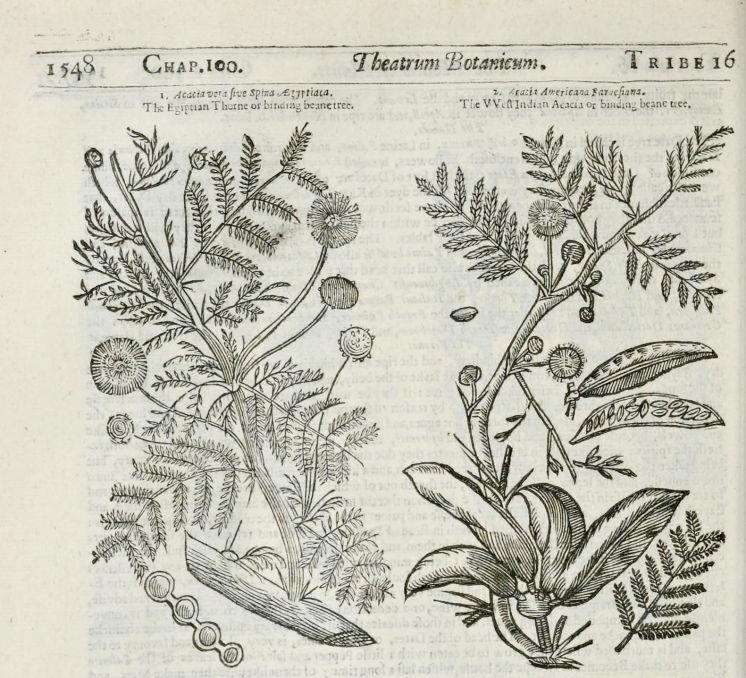
This month/Este mês: ACACIAS IN A BOTANICAL THEATRE: LINKING THE OLD AND NEW WORLDS/ ACÁCIAS NUM TEATRO BOTÂNICO SEISCENTISTA, ENTRE O VELHO E O NOVO MUNDO (by Manuel Miranda) pdf.EN pdf.PT
Manuel Miranda Fernandes (CEGOT / FLUP) https://www.researchgate.net/