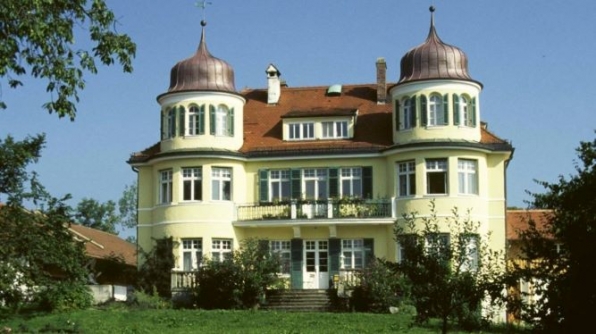
The Rachel Carson Center for Environment and Society and Herrmannsdorfer Landwerkstätten are pleased to invite applications for a new fellowship program that will be based in Herrmannsdorf.
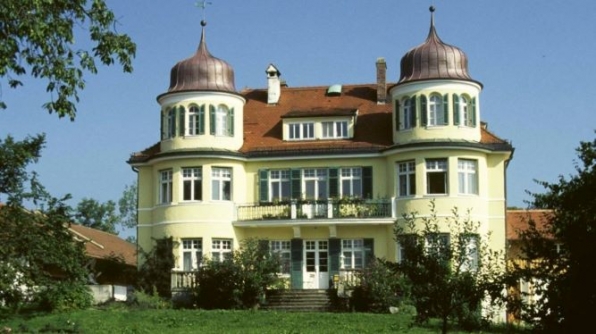
The Landhaus Fellowship Program is a residential program. Ten fellows will live and work together in the newly renovated historic house on the Herrmannsdorfer organic farm outside Munich. These fellowships are open to excellent doctoral, post-doctoral, and senior scholars who are working in the field of environment and society.
Applicants are welcome to apply individually or as interdisciplinary teams; we also accept applications for scholarly outreach projects (journalism, documentary film, community engagement, etc.). All fellows are expected to spend their fellowship in residence at the RCC Landhaus, to work on a major project, and to participate actively in life at the RCC. Please note that the RCC does not sponsor field trips or archival research.
Fellows at the RCC Landhaus will have their own bedroom and bathroom and will share kitchen, dining, and living spaces, which include a spacious conference room and large outdoor terrace and garden. Landhaus fellows will also be integrated in the academic life of the RCC in Munich; they will be allocated a workspace there, have full access to libraries and academic support, and will attend regular events at the center.
Fellowship Awards
In most cases, fellowships will be granted for a period of three, six, nine, or twelve months. The possible starting dates are 1 January 2022; 1 April 2022; 1 July 2022; and 1 October 2022; applicants must commit to arriving on one of the above dates. Applicants should indicate their preferred duration and a firm starting date in their application
The Landhaus fellowship includes the use of a single-occupancy room with its own bathroom in the RCC Landhaus. Fellows will receive a monthly stipend to cover basic living costs (food and transport) based on their career level at the start of the fellowship; the monthly stipend will be adjusted somewhat depending on the exact terms and conditions of the fellowship. As a rule, candidates can expect the following funding:
· 500 Euros for doctoral fellows
· 750 Euros for post-doctoral fellows
· 1000 Euros for senior fellows (15+ years post-doctoral)
Fellows will also receive a monthly food voucher for the on-site farm shop to the value of 125 Euros. The RCC will provide assistance with local transportation (e-bikes, subsidies for train travel to Munich, etc.). Unfortunately, the RCC is not in a position to reimburse travel costs to and from Munich/Herrmannsdorf from the fellow’s country of origin.
Requirements
· fellows must have a demonstrated academic record in the field of environment and society;
· fellows must either be enrolled in a doctoral program or finished with their doctoral degree by 15 June 2021;
· fellows must commit to a stay of between three and twelve months;
· fellowships must always start on the first day of the month and always conclude on the last day of the month;
· fellows must be willing and able to live in a residential accommodation with a diverse group of other scholars; please note that there are no facilities for partners and children at the RCC Landhaus and rooms are single occupancy only;
To Apply:
The deadline for applications is 15 June 2021. Applications must be made in our online portal. The application portal will be open from 15 May - 15 June 2021. It closes at midnight (Central European Time) on 15 June 2021. Shortlisted applicants may be invited for interviews (online) in July 2021. Decisions will be announced by 31 July 2021.
The application (in English) should include the following:
· Cover letter (750 words maximum);
· Curriculum vitae (3 pages maximum);
· Project description (1,000 words maximum)
· Research schedule for the fellowship period (300 words maximum), including starting date (must be fixed) and preferred length of stay; it is possible to take up the fellowship on 1 January 2022; 1 April 2022; 1 July 2022; 1 October 2022.
· Names and contact information of three scholars as referees; these scholars should be people who know you and your work well. Please note that we do not initially require letters, and we may not contact your referees.
Those submitting joint applications will each need to set up an account in the online submission system, and then upload the same cover letter, project description, and research schedule.
For more information, please visit the Frequently Asked Questions section of our website. Please consult this section thoroughly before contacting us with questions. If you do need to contact us, please email us at This email address is being protected from spambots. You need JavaScript enabled to view it.. This email address is checked during normal working hours in Munich; please understand that we may need a few days to get back to you.
For an online version, please click here.
Downloads